Mobile Diagnostics
Factory-tool fault diagnosis where the vehicle is parked
- Price range
- $99–$169
- Typical time
- 45–90 minutes at your location
$180–$1,200 · 1.5–3 hours per visit
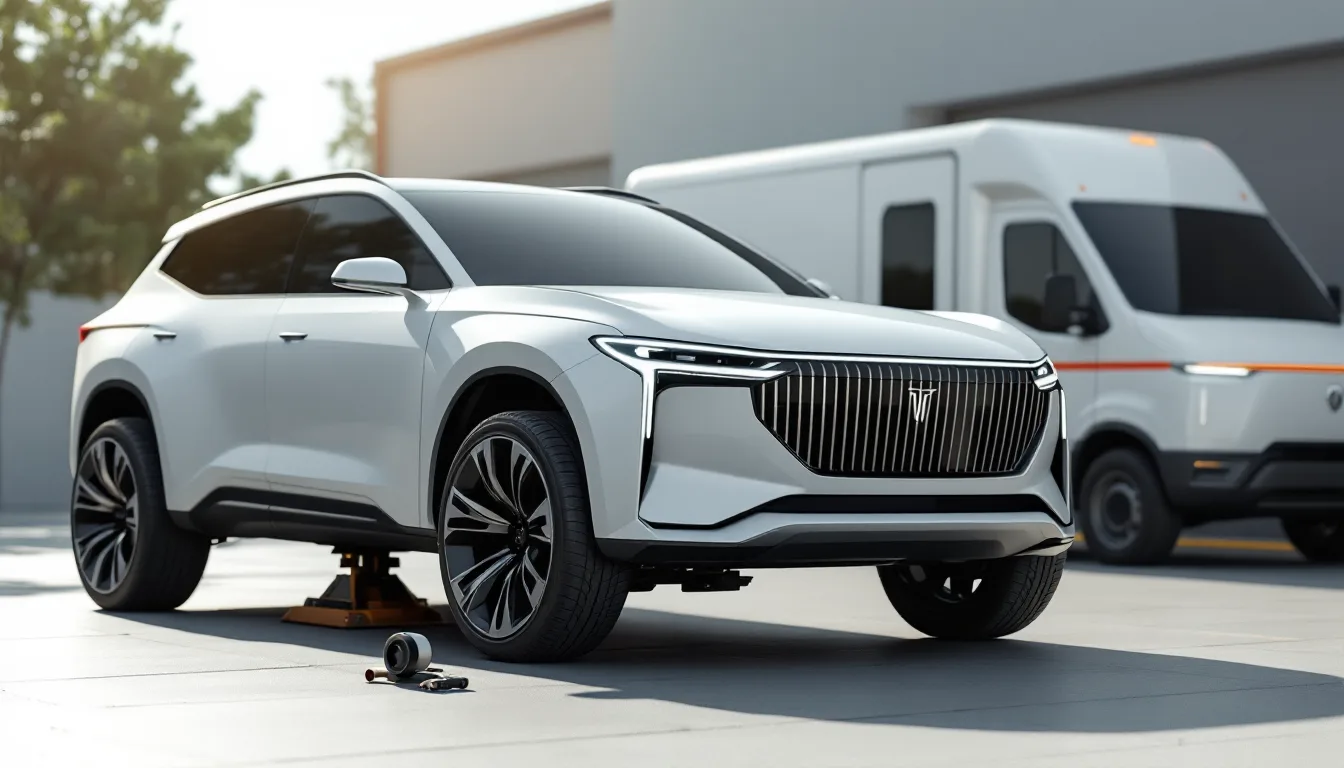
A brake job needs a flat spot, the right parts, a torque wrench and someone who measures before replacing. The van brings all four, and the vehicle never leaves your address.
Repairs done at your location, covered by a 2-year/24,000-mile warranty
Symptoms
Problem
High-pitched squeal when slowing
Likely cause
Wear indicator touching the rotor, or glazed pads from stop-and-go heat
The fix
Pads measured; replaced with new hardware if at the limit
Problem
Grinding from one wheel
Likely cause
Pad worn to the backing plate, scoring the rotor
The fix
Pads and rotor on that axle; caliper checked for a seized slide
Problem
Shudder through the wheel at highway speed
Likely cause
Uneven pad deposits or rotor thickness variation
The fix
Rotors and pads replaced, hub cleaned, runout checked
Problem
Soft or sinking pedal
Likely cause
Moisture in old fluid, air after a leak, or a failing master cylinder
The fix
Fluid tested and exchanged; leak traced and repaired
Problem
Pulls to one side under braking
Likely cause
Caliper seized on one side, or a collapsed brake hose
The fix
Caliper or hose replaced, system bled
Problem
Parking brake warning after a rear pad change elsewhere
Likely cause
Electronic parking brake never put into service mode or reset
The fix
Calibration with the tool at the vehicle
Yes, and the proof is in what the job needs rather than where it happens. A brake job needs the vehicle lifted one axle at a time on a level surface, the wheel off, the caliper and bracket removed, the rotor off the hub, the hub face cleaned, the new parts fitted with fresh hardware, the caliper slides lubricated, the wheel torqued to a number, and the pads bedded on the road. None of that needs a lift. It needs a floor jack, jack stands rated for the vehicle, a torque wrench and a flat driveway or parking space.
What a driveway does not provide is tolerance for shortcuts. The technician cannot leave the vehicle on a lift overnight for a part that did not fit, so the parts are matched to the VIN before the van leaves, and the rotor hub is cleaned to bare metal on every job because a rotor set on rust shudders within a month. Those are the habits that make a mobile brake job as good as a shop's, and the ones a cheap mobile job skips.
The one honest limit is terrain. A steep driveway in Rockwall or a gravel lot cannot hold jack stands safely, and the technician will ask to use the street or a flat spot nearby. If there is nowhere flat, the job is declined at the booking stage rather than at the vehicle.
By measuring, before the quote. Pad thickness is measured at every wheel through the spokes or with the wheel off, rotor thickness is measured against the minimum stamped on the rotor hat, and the rotor face is checked for scoring, heat spots and a lip at the edge. Caliper slides are tested for movement and boots for tears. The brake fluid is tested for moisture content with a meter.
The written range follows from those numbers. Pads with more than half their material left on the front but a wear indicator about to touch on the rear get a rear pad quote, not a four-wheel job. Rotors above minimum thickness with no scoring and no shudder are kept; rotors below minimum or with thickness variation are replaced, and replacing pads on a worn rotor is declined because the new pads will not seat and the shudder will return.
You see the measurements on the estimate and on the invoice. That is the only way to compare a brake quote: not pads versus pads, but what thickness the pads were at, what the rotor measured and what the fluid read.
Pads are matched to the vehicle and the driving. Ceramic pads are the default for sedans, crossovers and most SUVs: low dust, quiet, and comfortable with the repeated stops on Central Expressway. Semi-metallic pads go on trucks that tow, three-row SUVs that run heavy and any vehicle whose owner drives hard, because they handle heat better and fade later. Performance European vehicles get pads from the suppliers that make the factory parts, because the brake-by-wire and stability systems on those vehicles are calibrated for their friction behavior.
Rotors are coated or plain units from the manufacturers that supply the vehicle makers, in the factory size and vane design. A thinner or lighter rotor from a discount listing warps on the first hot stop in July, and the shudder it produces is blamed on the pads. Hardware, the clips and shims, is replaced with every pad set, because worn clips are why new pads rattle and wear unevenly.
Summer in Dallas is the hardest test of a brake job. A rotor that was not seated on a clean hub, a pad that was not bedded, or a slide pin that was not lubricated all show up in the first hundred-degree week. The van's parts choices and the bedding road test exist to get through that week quietly.
Most vehicles built in the last decade have an electronic parking brake, a motor on each rear caliper instead of a cable. Changing rear pads on those vehicles means commanding the motors to retract with the tool before the caliper can be compressed, and commanding a calibration afterwards. Forcing the piston back without the tool damages the motor and sets a parking brake fault, which is the most common failure of a cheap mobile brake job on a newer vehicle.
The brand-level tools in the van put the parking brake into service mode and reset it on BMW, Mercedes-Benz, Audi, VW, Ford, GM, Toyota, Honda, Hyundai, Kia and the rest. On vehicles with a brake wear sensor, the sensor is replaced with the pads and the service counter is reset so the dash message clears. On vehicles with brake-by-wire or an electric booster, the bleed procedure is run through the tool because a manual bleed cannot purge those units.
If the vehicle has a stability-control fault stored from a low battery or an earlier repair, the technician reads and clears it after the brake work, and tells you if it points to something unrelated.
Brake fluid absorbs water from the air through the hoses and the reservoir cap. After two or three years in Texas humidity it can hold enough moisture to lower its boiling point by a third, which is why a pedal that was firm in the morning goes soft after a long descent or a string of hard stops. Moisture also corrodes the ABS modulator and the caliper bores from the inside, and those repairs cost many times what a fluid exchange does.
The meter reads moisture content in seconds. Below the threshold the fluid stays; above it an exchange is quoted and done in the same visit, with the correct DOT grade for the vehicle and a bleed at every wheel. On vehicles with ABS units that need the tool to cycle the valves, the tool runs the routine so old fluid is not trapped in the modulator.
Fluid condition goes on the invoice next to the pad and rotor measurements, so the next decision about the brakes starts from numbers rather than from a sound.
Pads on one axle with hardware and the parking brake reset run $180–$320. Pads and rotors on one axle run $320–$620, with the vehicle setting the figure: a compact sedan at the low end, a heavy-duty truck or a European SUV with large rotors at the top. Pads and rotors on both axles run $620–$1,200. A caliper that has seized adds $220–$450 per corner, and a brake fluid exchange is $110–$180.
All of those figures include the trip inside the 30-mile radius, the measurements, the road test and the 2-year/24,000-mile warranty on parts and labor. The estimate is written at the vehicle after the measurements, and nothing beyond the measured need is quoted.
A single axle of pads and rotors takes about ninety minutes from the van arriving to the road test finishing; both axles take two and a half to three hours. The vehicle must stay on the stands for that time, so a driveway or a reserved space at the office works and a street with a two-hour limit usually does not.
After the road test the brakes are ready to drive normally. Bedding is already done; the only advice for the first day is to avoid holding the brake hard at a stop straight after a long highway descent, which can leave a pad imprint on a new rotor.
Pads and rotors come from the manufacturers that supply the vehicle makers, matched to the VIN, with new hardware on every job; ceramic or semi-metallic pads are chosen for the vehicle and how it is driven, and the written range names the brand. Rotors below the minimum thickness stamped on the part are replaced, not machined, because machining in a driveway is neither possible nor worth the thinner rotor it leaves.
The figure inside each range is set by the vehicle: rotor size and pad compound on a heavy truck or a German SUV cost more than on a compact, and an electronic parking brake adds the tool session. Calipers are replaced only when a slide or piston is seized and the measurement is shown to you; a caliper that moves freely is cleaned and lubricated.
Brake fluid is the DOT grade the vehicle specifies. Every fastener is torqued with a calibrated wrench and the wheel torque is written on the invoice.


Pricing
| Service | Price range | Typical time |
|---|---|---|
| Brake pads, one axle, hardware and parking brake reset | $180–$320 | 1–1.5 hours |
| Pads and rotors, one axle | $320–$620 | 1.5–2 hours |
| Pads and rotors, front and rear | $620–$1,200 | 2.5–3 hours |
| Caliper replaced, per corner, with bleed | $220–$450 | Added to the axle job |
| Brake fluid exchange, tested first | $110–$180 | 45–60 minutes |
Typical Dallas-Fort Worth mobile ranges including the trip; vehicle size, pad compound, rotor type and an electronic parking brake move the figure, which is written after the wheels are measured.
The offer
Risk reversal
Covered for 2 years parts and 2 years labor, up to 24,000 miles, nationwide
No deposit, no card online: the written range is approved before any part is fitted
Published range
$180–$1,200
1.5–3 hours per visit
Questions
Flat enough for jack stands, which rules out steep inclines and loose gravel. A gentle slope is workable with wheel chocks. If your driveway is steep, a level stretch of street or a parking space nearby is used instead, and the technician confirms it when you send a photo of the spot.
Yes, when the measurements support it. Every wheel is measured first, and the estimate quotes only the axle that is at or near the limit. The other axle's numbers go on the invoice so you know roughly when it will be due.
No. Rotor lathes do not travel, and a rotor thin enough to need resurfacing is usually close to its minimum anyway. Rotors above minimum with no scoring are kept; rotors below it or with thickness variation are replaced with new units from the manufacturers that supply the vehicle makers.
Yes. The parking brake motors are retracted with the brand-level tool before the pads come out and calibrated afterwards. Doing it without the tool is what causes the parking brake faults drivers report after a cheap rear brake job.
Immediately. The pads are bedded on a road test from your address before the technician leaves, so the brakes are already seated. Avoid a long hard stop followed by holding the pedal at a standstill for the first day, which can mark a new rotor.
The parts cost the same; the difference is that nothing is spent on a building, and you spend nothing on a ride or a day off. The published ranges are typical for mobile work across Dallas-Fort Worth, and the measurements on the estimate let you compare any shop quote line for line.
Related
Factory-tool fault diagnosis where the vehicle is parked
Correct-spec oil and filter, done in your driveway

Vans and trucks serviced at your yard between shifts
Book Brakes at Home at your location in Dallas
Brake pads, rotors, calipers and brake fluid replaced in your driveway or office lot with the vehicle on jack stands, torque wrenches and a bleed, so the brake job happens without the vehicle leaving home.