Keys and programming
On-Site Key and Module Programming: When You Skip the Tow
· 13 min read · Mobile Mech LLC
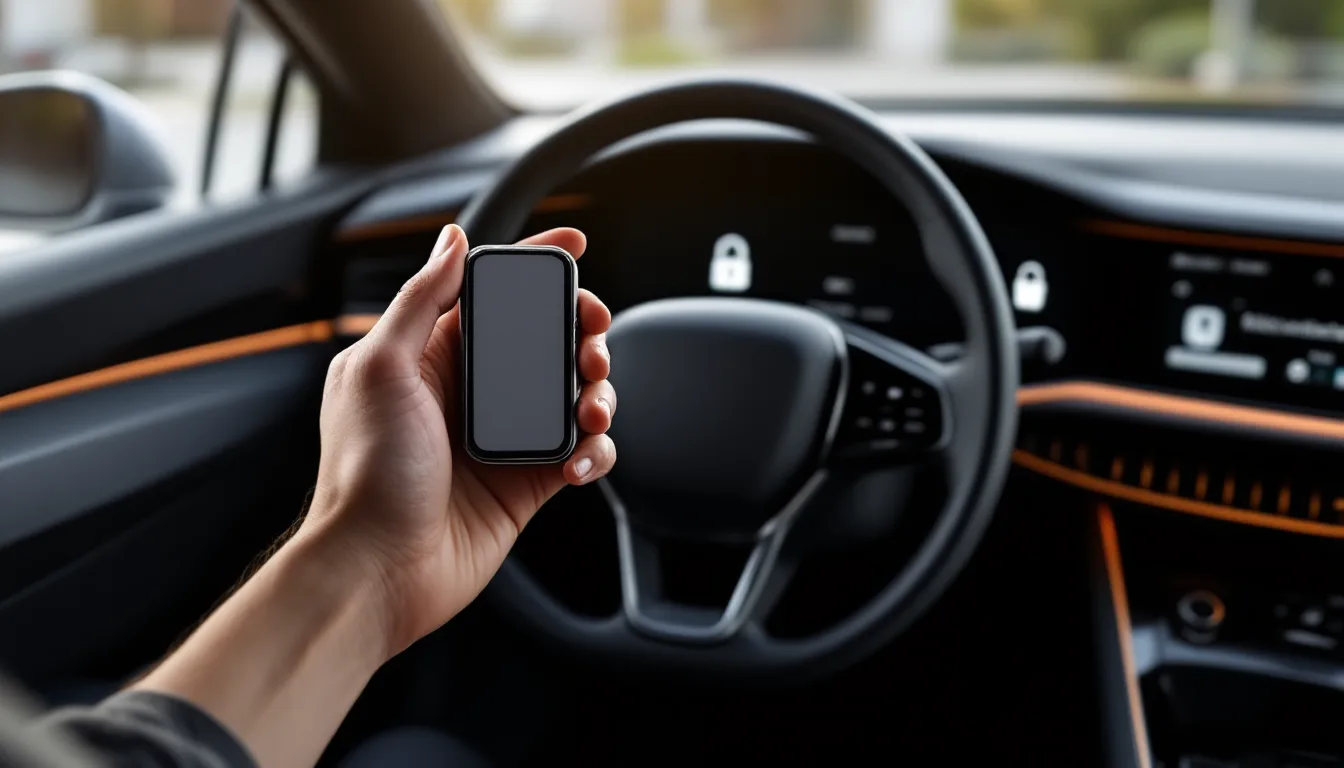
When does a key or module problem not need a tow to the dealer?
A vehicle that refuses its key, a fob that stopped locking the doors, a lost set, or a replacement control module the vehicle will not accept are all programming problems, and programming equipment fits in a van. Most drivers assume these jobs need the dealer, and for most of them that means a tow or a long wait on a dealer lot. A mobile technician with brand-level tools and the manufacturer accounts some makes require programs keys, fobs and modules at the vehicle: a spare key from $120, all-keys-lost recovery $250–$650 plus the keys, and module coding $150–$350, with the trip included inside 30 miles of east Dallas and proof of ownership checked before anything is programmed. This guide explains what a key actually needs before the engine will run, which jobs are done in the driveway, which makes and years still require a dealer, and how to tell the difference before you email service@mobilemechllc.com.
What does a key need before the engine will start?
Every vehicle built since the late 1990s has an immobilizer, which Wikipedia defines as "an electronic security device fitted to a motor vehicle that prevents the engine from being started unless the correct key" is present, in its immobiliser entry. The key carries a transponder chip; the ignition or the push-button system reads it; the immobilizer checks it against a list of authorized keys and, only then, tells the engine controller it may run. A key cut to the right profile but never added to that list turns the lock and does nothing else, or starts the engine for two seconds before the fuel is cut off.
Adding a key to the list is programming, and it needs two things: a tool that speaks the vehicle's security protocol, and on many makes a security code or a manufacturer's online authorization for that VIN. The brand-level tools in the van provide the first; the registrations the technician holds provide the second on the makes the van serves. That combination, tool plus authorization, is what separates a mobile programmer from a key cutter.
The remote functions are separate. On most vehicles the lock, unlock, trunk and remote-start functions live in a different circuit from the transponder and are programmed in a separate step. A fob that starts the engine but will not open the doors has had half the job done; both halves are done and tested at the vehicle before the technician leaves.
How is a spare key programmed in your driveway?
The visit begins with ownership. The technician checks a photo ID against the registration, title or insurance card before the tool is connected, because programming a key to someone else's vehicle is theft with extra steps and a legitimate request loses nothing by the check. With that done, the tool reads the immobilizer, lists the keys currently authorized and confirms the vehicle will accept another.
If you supplied the key, it is checked for the right transponder type and, on bladed keys, cut to the vehicle's code from the existing key or decoded from the lock. If the van supplies it, it comes from stock for the common models or is ordered to the VIN for a return visit. The new key is added through the tool, the remote functions are programmed, and both keys are tested to start the engine and work the locks. Where the make requires an online session, the technician runs it from the van over a mobile connection.
On a common Ford, GM, Toyota, Honda, Nissan, Hyundai or Kia the whole job takes forty-five minutes to an hour. European makes and vehicles that require security data take longer and sit at the top of the range. The key and module programming page lists the makes covered and the figures for each line, and the Plano city page describes why that city generates more of these calls than any other.
What happens when every key is lost?
All-keys-lost is the job that most often ends in a tow to a dealer, and it is the one a mobile programmer saves the most on. Without an existing key to learn from, the tool must reach the immobilizer directly: through the diagnostic port on vehicles that allow it, or through the security module or the engine controller on vehicles that do not. The van carries the equipment and the licenses for that on most domestic and Asian makes and a good share of the European ones.
The vehicle also needs a key that physically fits. For bladed keys the technician cuts to the code obtained from the VIN or decodes the door lock; for smart fobs the correct part is matched to the VIN and, for common models, comes from the van. Two keys are programmed whenever possible, because a vehicle with one key is back in this situation the next time it falls in Lake Ray Hubbard.
Some vehicles are declined honestly. A few recent European platforms and certain high-security systems require a dealer's online pairing that a mobile tool cannot replicate. The technician says so when you send the year, make and model, before any trip is made, and explains what the dealer process involves. Finding that out by text costs nothing; finding it out after a tow costs the tow.
How are replacement control modules coded to the vehicle?
A control module, the engine controller, the body module, the ABS unit, the transmission controller, a gateway, an instrument cluster, is built generic and coded to the vehicle on the assembly line: which engine, which options, which market, and a pairing with the immobilizer so it cannot be stolen and used elsewhere. Fit a new or used module without that coding and the vehicle either refuses to start or behaves as though it were a different trim.
The van's tools perform the coding at the vehicle. A new module from the dealer parts counter is coded to the VIN and matched to the immobilizer. A used module from a donor vehicle is cleared of its old pairing where the make allows, then matched; where the make does not allow it, the technician says so before you buy the used part. After coding, the adaptations the module stores are relearned: throttle position, steering angle, transmission shift points, window limits, climate flap positions.
Programming through the vehicle's standard diagnostic port follows the SAE J2534 pass-through standard on many makes, which lets the manufacturer's own software run through an interface the van carries. The National Automotive Service Task Force maintains the Vehicle Security Professional registry that gives credentialed independent technicians access to the security information and key codes manufacturers release, and that registry is part of what makes on-site key work possible outside a dealership.
This is the work that turns a mobile mechanic into something more than a parts changer. A failed body module on a vehicle that will not start in a Richardson garage is a tow, a dealer diagnostic and a week without the vehicle, or it is one visit with the part ordered to the VIN and coded on the spot.
Which makes and years can be programmed on site, and which still need a dealer?
The honest answer is a table with a lot of "usually" in it, because the capability changes between generations of the same make. The table summarizes what the van handles for the common makes in Dallas-Fort Worth, and the booking reply confirms the exact year and model before any trip.
| Make group | Spare key or fob | All keys lost | Module coding | Notes |
|---|---|---|---|---|
| Ford and Lincoln | Yes, across PATS generations | Usually | Yes | Newer models need an online session the van runs |
| GM: Chevrolet, GMC, Buick, Cadillac | Yes | Usually | Yes | Some recent models need a security wait or an online session |
| Stellantis: Ram, Jeep, Dodge, Chrysler | Yes | Usually | Yes | Security gateway unlock required from the 2018 model year on; the van carries it |
| Toyota and Lexus | Yes, including smart fobs | Usually | Yes | A few recent models require dealer seed-key access |
| Honda and Acura | Yes | Usually | Yes | |
| Nissan and Infiniti | Yes | Usually | Yes | |
| Hyundai, Kia and Genesis | Yes | Usually | Yes | Smart fobs on recent models need the brand tool sequence |
| Subaru and Mazda | Yes | Usually | Yes | |
| BMW and Mini | Most years | Many years | Most years | Some recent generations require dealer online pairing |
| Mercedes-Benz | Most years | Many years | Most years | Newer security generations are dealer-only for keys |
| Audi, Volkswagen, Porsche | Most years | Many years | Most years | Component protection on some modules requires the manufacturer's online release |
Motorcycles, heavy trucks, agricultural equipment and most vehicles older than 1998 are outside the scope, and the technician points you to the right specialist rather than making a trip that ends without a key.
What does on-site programming cost in Dallas, and how does it compare with a dealer?
Programming a spare key or fob you already have runs $120–$280 with the trip included; a key blank or smart fob supplied from the van adds $60–$350 depending on the vehicle. All-keys-lost recovery runs $250–$650 plus the keys, with the European makes and the vehicles that need an online security session at the top. Coding a replacement module runs $150–$350, and re-matching a used module where the make allows runs $150–$300. The pricing page lists these beside the other mobile ranges.
Dealer quotes for the same work are commonly higher, and the bigger difference is the trip you do not make: the dealer needs the vehicle on its lot, often for most of a day, while the van programs the key in your driveway in under an hour on most makes. For all-keys-lost the dealer route also includes a tow, because the vehicle cannot drive itself there.
The people doing this work are a specialized slice of a large trade. The Bureau of Labor Statistics counts 805,600 automotive service technician and mechanic jobs in 2024 at a median of $23.88 an hour, according to the BLS Occupational Outlook Handbook; technicians who hold the programming tools, the manufacturer accounts and the security credentials are a far smaller pool, which is why programming visits are priced as skilled work. Against the AAA figure of $12,297 a year to own and run a new vehicle, per AAA, a spare key programmed before the only one is lost is one of the cheaper pieces of insurance a driver can buy.
What should you try before booking when the key is not recognized?
Three checks take a minute each and solve a surprising share of calls. First, the fob battery. A push-button vehicle that shows a key-not-detected message, or that starts only when the fob is held against the start button or placed in the marked slot in the console, has a fob with a flat coin cell. Replacing it restores the transponder and the remote together, and the owner's manual shows where the emergency slot is for the days in between.
Second, the other key. If the spare starts the vehicle and the main key does not, the main key's transponder has failed or its remote has lost its pairing, and the job is a single key programmed or replaced. If neither key works, the problem is in the vehicle: the security module, the antenna ring around the ignition, or the pairing with the engine controller, and the diagnosis starts there rather than with a new key.
Third, the 12-volt battery. A vehicle whose dash is dim, whose interior lights flicker when the door opens, or that was jump-started this week has a battery problem first and a security symptom second. On some makes a deep discharge corrupts the stored pairing, and the security light that followed the jump is cured by restoring that pairing with the tool, not by a new key. Describing which of the three you found in the booking text lets the technician load the van for the right job, and the no-start page covers the battery side of that overlap.
If none of the three applies, the vehicle has a genuine programming need, and the sections above say what it will involve.
What goes wrong when programming is skipped or done badly?
The common failures are predictable. A key cut at a hardware store and never programmed, which starts nothing. A fob bought online that was already paired to another vehicle and cannot be reprogrammed, which the technician can identify from the listing before you buy it. A used engine controller fitted without re-matching, which leaves the vehicle immobilized until the pairing is cleared, and on some makes can never be cleared. A battery replaced without attention to the immobilizer on vehicles where a deep discharge corrupts the pairing, which turns a battery job into a no-start.
The rarer failure is the serious one: a programming session interrupted by a low vehicle battery. Module programming writes software to the vehicle, and a voltage drop mid-write can leave a module unusable. The van connects a power supply to the vehicle before any programming session and checks the battery first, which is routine and is the reason the battery test precedes every programming job.
The last failure is the security one. A programmer who does not check ownership is a programmer who would program a key for anyone holding your VIN, and the check at the start of every visit protects you as much as anyone else. A vehicle under an open recall for a security or electrical module is repaired at no charge by the dealer; check the VIN at NHTSA's recall lookup before paying for a module that the manufacturer owes you.
How do you book a key or module job, and what should you send?
Send the year, make, model and VIN, how many keys you have and whether the remote works, and where the vehicle sits. For a module, send the fault the diagnosis found or the part number of the module you have been told to replace, and say whether you have already bought a used one. For all-keys-lost, say whether the vehicle is in a garage, a driveway or a lot, and whether it can be reached by the van.
The reply tells you three things: whether the job is one the van can do for that exact vehicle, the range it falls in, and the documents to have ready. If the answer is that the make and year need a dealer, you have learned that by text rather than after a tow. If the answer is yes, the arrival window follows, and the technician arrives with the tool, the fob from stock where the model is common, and a power supply for the vehicle.
A spare key programmed today is the cheapest version of this job; the services index lists it beside the other mobile services, and the Frisco city page explains why the newest vehicles in the metro generate the most programming calls.
Where do these figures come from?
- Immobiliser: the quoted definition and the technology background.
- National Automotive Service Task Force: the Vehicle Security Professional registry for independent technicians.
- Bureau of Labor Statistics, Automotive Service Technicians and Mechanics: the broad trade from which the much smaller pool of programming-equipped technicians is drawn.
- AAA, Your Driving Costs 2024: the ownership budget a spare key is cheap insurance inside.
- NHTSA recall lookup: security and electrical modules under recall are replaced by the dealer at no charge; check before paying.
- FTC, Auto Warranties and Routine Maintenance: programming by an independent does not void the manufacturer's warranty on the vehicle.
- Programming ranges: typical mobile ranges across Dallas-Fort Worth from the service pages of this site; the written range for a specific vehicle is confirmed from its VIN before the visit.