
No-Start and Will-Not-Start Repair
Clicks, cranks or dead: fixed where it stopped
- Price range
- $99–$1,100
- Typical time
- 1–3 hours at the vehicle
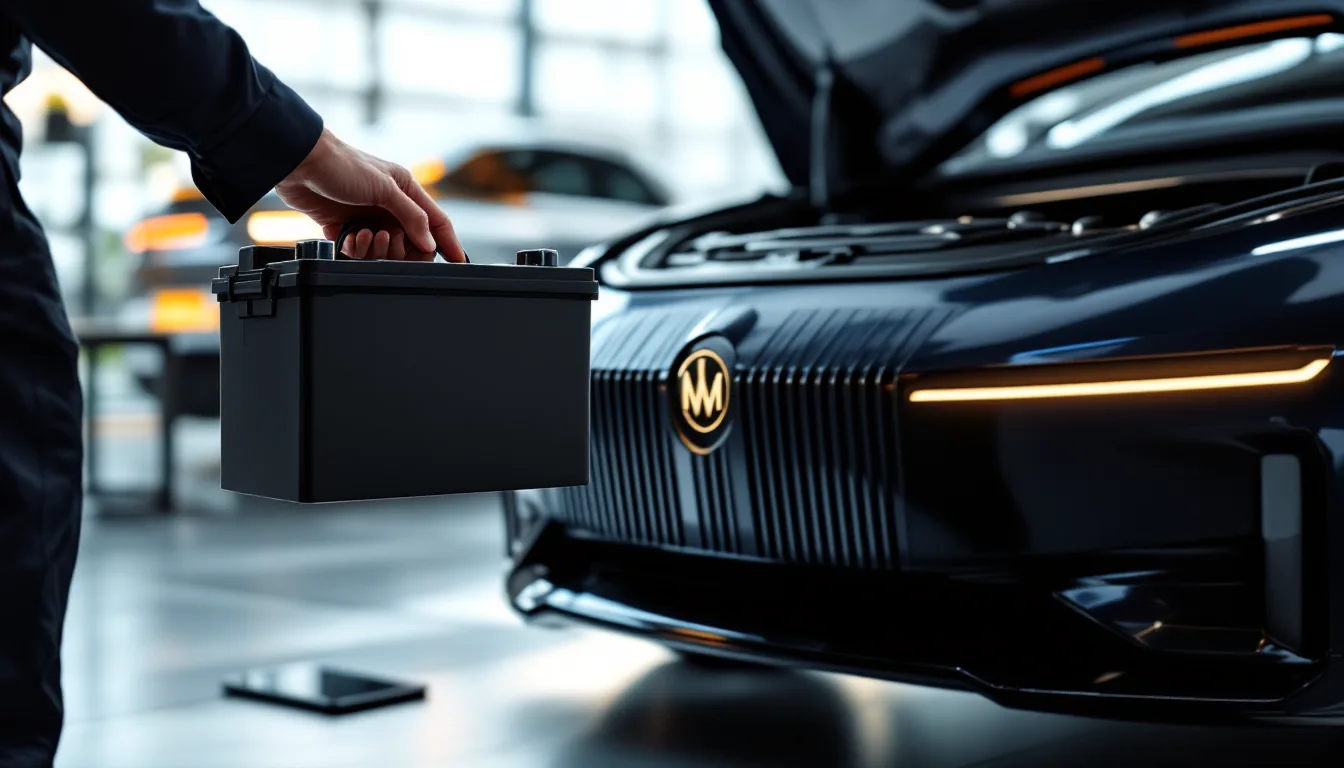
$180–$620 · 30–60 minutes at your address
The right battery for the vehicle, fitted where it sits and registered to the charging system where the manufacturer requires it, so the new battery lasts and the start-stop, memory and warning systems behave.
Repairs done at your location, covered by a 2-year/24,000-mile warranty
Symptoms
Problem
Slow crank on the first start of the day
Likely cause
Plates sulfated after a Texas summer; capacity gone though voltage reads fine
The fix
Conductance test confirms it; new battery in the correct group size
Problem
Start-stop never engages
Likely cause
AGM or EFB battery below the state of health the system requires
The fix
Correct chemistry fitted and registered so the system re-enables
Problem
New battery from a parts store died in months
Likely cause
Flooded battery fitted where AGM was specified, or never registered
The fix
AGM fitted and registered; charging profile reset to a new battery
Problem
Battery light on with a good battery
Likely cause
Alternator or belt, not the battery
The fix
Output and ripple tested; alternator or belt replaced instead
Problem
Random warnings and a transmission message after a low battery
Likely cause
Modules browned out and stored faults
The fix
Battery replaced, faults cleared with the tool, relearns performed
Heat kills batteries; cold just reveals the damage. A battery under a hood that sits at 140 degrees in an August parking lot at Firewheel or NorthPark loses water from its cells, corrodes its internal grids and sheds active material from the plates months faster than the same battery in a northern climate. The capacity goes quietly through the summer, and the first cool morning in November, when thicker oil demands more cranking amps, is when it finally shows.
That is why a battery that tests fine on voltage alone can still strand you. A resting reading of 12.6 volts says the battery is charged; it says nothing about how many amps it can deliver when the starter asks. The conductance tester carried in the van measures the internal condition and reports a state of health, and that figure, not the sticker date, decides whether a battery is replaced.
Three to four summers is a realistic life for a flooded battery in North Texas, four to five for an AGM that was registered properly, and considerably less for any battery that spent a season being drained flat and jumped. The test on your invoice gives you the number so you are not replacing a battery with two years left or keeping one with two weeks.
A flooded battery is the traditional design: lead plates in liquid acid. It is the cheapest and it is correct for most vehicles built before start-stop systems arrived. An enhanced flooded battery, EFB, has thicker plates and better cycling for basic start-stop vehicles. An absorbed glass mat battery, AGM, holds its acid in fiberglass mats, tolerates deep cycling and vibration, and is specified by every German make and by most vehicles with start-stop, large infotainment systems or trunk-mounted batteries.
Fitting a flooded battery where AGM is specified is the single most common mistake in mobile and parts-store battery work. The vehicle charges an AGM to a different voltage profile, the start-stop system reads the wrong state of health and disables itself, and the flooded battery is cooked by the higher voltage within a year. The van carries AGM in the common sizes precisely so the substitution never has to happen in your driveway.
The reverse is fine. An AGM fitted to a vehicle that specified flooded costs more and lasts longer, and on a vehicle with heavy accessory load, a trailer brake controller, a light bar, a sound system, it is often the better choice. The written range shows both options where both apply.
Vehicles with intelligent charging track the battery's age and adjust the alternator's voltage as the battery wears, pushing a tired battery harder to keep it charged. When a new battery goes in, the vehicle has to be told, or it keeps charging the new battery as though it were the old one, overcharging it from day one. That telling is registration, and on vehicles where the capacity or chemistry changed, coding the new specification is the second step.
BMW and Mini have required it since the mid-2000s, Mercedes-Benz, Audi and Volkswagen since roughly the same era on their intelligent-charging platforms, and a growing list of Ford, GM, Stellantis, Toyota, Honda, Nissan, Hyundai and Kia vehicles with start-stop now need a battery reset through the tool. The symptom of skipping it is subtle: no light, no code, just a battery that fails in eighteen months instead of five years and a start-stop system that quietly stays off.
The brand-level tools carried in the van perform the registration and coding at the vehicle. That is the part a parts-store installer or a roadside jump service cannot do, and it is why the European line on the price table costs more than a domestic swap: the tool session is part of the job.
The old battery is tested first, in the vehicle, so the decision to replace it rests on a measurement you can see. The alternator is tested next: output voltage, output under load and AC ripple, because a new battery on a failing alternator is a repeat visit in a month. On vehicles that lose adaptations, a memory saver is connected through the diagnostic port so windows, sunroof, steering angle sensor and radio presets survive the swap.
Then the battery comes out. Trunk batteries on BMW and Mercedes-Benz, under-seat batteries on many Audi, VW and Chrysler vehicles, and the increasingly common batteries hidden under a cowl panel or behind the fender liner all take longer than a hood battery and are priced accordingly. The tray and hold-down are cleaned, corroded terminal ends are replaced from van stock, and the new battery is secured so it cannot shift.
The last step is the one that gets skipped elsewhere: registration and coding where required, a start and a charging check, and a scan to clear the low-voltage faults the old battery left in the modules. The old battery goes in the van for recycling. The whole visit takes thirty minutes on a hood battery and about an hour on a trunk or under-seat battery with registration.
German sedans and SUVs lead the list, because the trunk-mounted AGM with registration is exactly the job a parts store will not do and a dealer charges a day for. BMW 3, 5 and X-series, Mercedes-Benz C, E and GL-class, Audi A4, A6 and Q5 and the VW Tiguan and Atlas make up most of those calls, usually after a winter morning no-start or a cascade of warning messages on the dash.
Full-size trucks and SUVs are next. An F-150, Silverado, Ram or Tahoe with a tool box, a trailer controller and a summer of short trips drains a flooded battery fast, and the owner would rather have it done in the driveway before work than lose a morning at a shop. Many of these now specify AGM from the factory and the van fits like for like.
Hybrids are a special case: the 12-volt auxiliary battery, often a small AGM in the trunk, fails more often than owners expect and produces a dead dash that looks like a hybrid system failure. It is replaced on site with the correct AGM; the high-voltage pack is never opened at a residence.
A flooded battery installed at your address runs $180–$320. An EFB or AGM for a start-stop or accessory-heavy vehicle runs $280–$520. A German or other registration-required vehicle with a trunk or under-seat AGM and the tool session runs $320–$620. If you already bought the right battery and only need it fitted and registered, that is $79–$129 with the trip included.
The call-out is part of each figure inside the 30-mile radius, and the battery and the labor are covered for 2 years parts and 2 years labor, up to 24,000 miles, nationwide. Where the test shows the alternator is the real fault, the technician tells you before fitting a battery you do not need and quotes the alternator instead.
Batteries carried in the van are new stock from the major manufacturers that supply the vehicle makers, in flooded, EFB and AGM types and the common group sizes; the invoice shows the brand, group size, cold cranking amps and the date code. A vehicle that specifies AGM receives AGM without exception. Unusual sizes, such as some Japanese JIS and European LN sizes, are ordered to the vehicle and fitted on a second visit priced as the first.
Three things set the price inside the range: chemistry, where the battery lives in the vehicle, and whether registration and coding are needed. A hood-mounted flooded battery on a Camry is the floor; a trunk AGM on a BMW with registration is the ceiling. Terminal ends, hold-downs and the memory saver are in the price.
The old battery is recycled through the supplier; the core value is credited on the invoice where one applies, and you are welcome to keep the test printout showing why it was replaced.


Pricing
| Service | Price range | Typical time |
|---|---|---|
| Flooded battery installed, hood-mounted | $180–$320 | 30–45 minutes |
| EFB or AGM battery installed, start-stop vehicles | $280–$520 | 30–60 minutes |
| AGM with registration and coding, BMW, Mercedes, Audi, VW | $320–$620 | 45–75 minutes |
| Fit and register a battery you supply | $79–$129 | 30–45 minutes |
| Alternator replaced if the charging test fails | $400–$900 |
Typical Dallas-Fort Worth mobile ranges including the trip; group size, chemistry, battery location and the registration step set the figure, confirmed in writing before the battery comes out of the van.
The offer
Risk reversal
Covered for 2 years parts and 2 years labor, up to 24,000 miles, nationwide
No deposit, no card online: the written range is approved before any part is fitted
Published range
$180–$620
30–60 minutes at your address
Questions
Yes. The fit-and-register line covers it, provided the battery is the correct chemistry and group size. If it is a flooded battery for an AGM vehicle, the technician will say so before fitting it, because the vehicle will shorten its life and may disable start-stop.
Yes. The charging system adjusts voltage to the battery's recorded age. Left unregistered, it overcharges the new battery, shortens its life and on many models keeps the stored low-voltage faults active. The registration is done at your address with the brand-level tool as part of the job.
Normally no. A memory saver keeps the modules powered through the swap on vehicles that would otherwise lose settings. On a few vehicles a window or sunroof relearn is still needed afterwards, and the technician performs it before leaving.
Both are tested at the visit: the battery for state of health and cranking capacity, the alternator for output under load and AC ripple. The readings are on the invoice, and if the alternator is the fault you are quoted that repair instead of a battery you do not need.
It goes in the van and back to the supplier for recycling, which is where nearly every lead battery in the country ends up. Any core charge appears on the invoice as a credit once the old unit is handed over.
Yes. Office lots and open garages work well as long as the hood can open fully and the vehicle is reachable by the van. Leave the key at reception or with a colleague, and the technician texts you the test results and the invoice when it is done.
Related
Clicks, cranks or dead: fixed where it stopped
Factory-tool fault diagnosis where the vehicle is parked

Keys and modules programmed where the vehicle sits
Book Battery Replacement at Home at your location in Dallas
New flooded, EFB or AGM battery fitted where the vehicle is parked, with the registration and coding that newer vehicles and every German make require, and the charging system tested before the van leaves.