No-Start and Will-Not-Start Repair
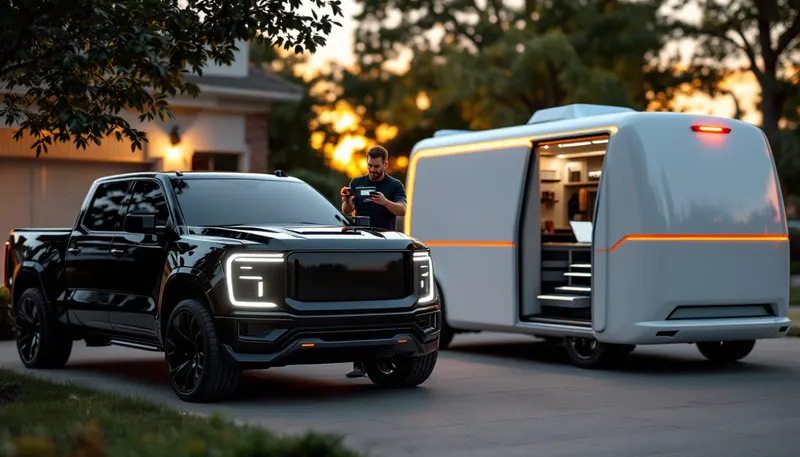
Clicks, cranks or dead: fixed where it stopped
- Price range
- $99–$1,100
- Typical time
- 1–3 hours at the vehicle
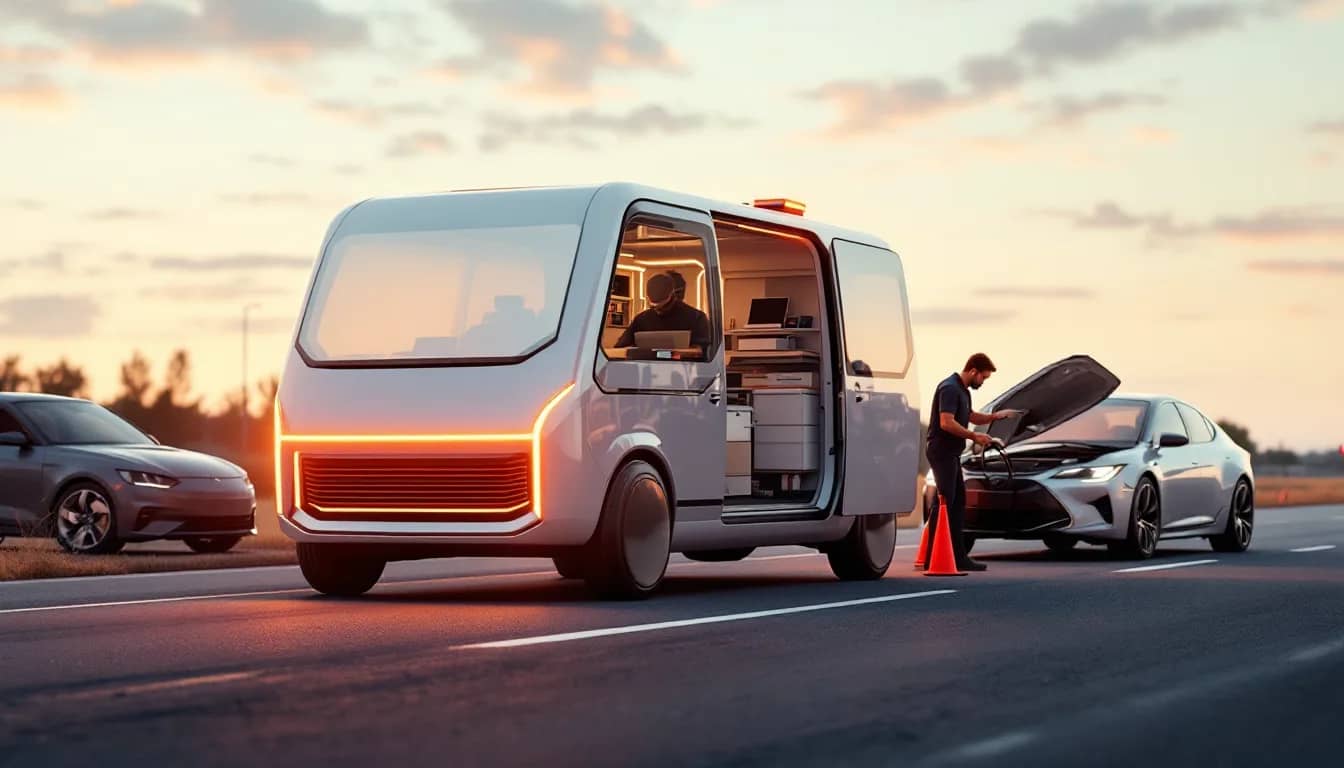
$69–$450 · 30–90 minutes on the shoulder or lot
A tow moves the problem; it does not solve it. When the failure is a belt, a hose, a battery or a tire, the van fixes it where the vehicle stopped and you drive on, and when it is not, you hear that before paying for the trip.
Repairs done at your location, covered by a 2-year/24,000-mile warranty
Symptoms
Problem
Stopped, dash dead, will not crank
Likely cause
Battery failed or a terminal broke loose
The fix
Tested on the shoulder; terminal repaired or battery replaced
Problem
Squeal then battery light, steering heavy
Likely cause
Serpentine belt shredded or tensioner failed
The fix
Belt, tensioner or idler replaced from stock; charging confirmed
Problem
Steam, temperature gauge at the top
Likely cause
Burst hose, failed thermostat or a fan that stopped
The fix
Pressure test cold; hose or thermostat replaced, system filled and bled
Problem
Flat tire on the shoulder
Likely cause
Puncture or sidewall failure
The fix
Spare fitted or a tread puncture plugged; pressures set; tire shop advised
Problem
Sputters and dies, restarts and dies again
Likely cause
Out of fuel, failing fuel pump or a clogged filter
The fix
Pressure checked; fuel delivered or pump diagnosed for a follow-up
Problem
Wrong fuel at the pump
Likely cause
Diesel in a gasoline tank or gasoline in a diesel
The fix
Do not start it; the technician advises on draining and the tow if needed
The first question is not what failed but where. A vehicle on a residential street, in a parking lot, on a wide frontage road shoulder or on the apron of a gas station can be worked on. A vehicle in a live lane of I-635, on the narrow shoulder of the High Five, or on a bridge over Lake Ray Hubbard cannot, and no repair is worth a technician or a driver standing in that traffic. In those places the right call is to get the vehicle moved to a safe spot first, by a tow if it will not roll, and then to do the repair.
The second question is what failed. Belts, hoses, thermostats, batteries, terminals, tires, fuel delivery and many stalls are repaired in place. An engine that hydrolocked in a flooded underpass, a timing belt that snapped, a transmission that will not engage any gear, or an overheating that has already warped a head are tows, and the roadside assessment confirms which you have before you pay for either a repair that cannot work or a tow you did not need.
Texas law requires drivers to move over or slow down for stopped service vehicles with warning lights, and the van uses them. Still, a shoulder is only as safe as the traffic beside it, and the technician makes that call on arrival.
Get as far right as the vehicle will go, put on the hazard lights, and if you are on a highway shoulder stay in the vehicle with the seat belt on unless there is a barrier to stand behind. Text the location with a pin, the vehicle, and what happened in the last minute before it stopped: a noise, a smell, a light, a gauge. That last minute is the diagnosis most of the time.
Do not keep cranking a vehicle that will not start; a starter that is heat-soaked will fail, and a battery that is nearly flat will be fully flat by the time help arrives. Do not open a hot radiator cap. Do not add water to an engine that overheated until someone has checked why; cold water into a hot aluminum head is how a hose failure becomes a head gasket failure. If the vehicle has power steering and power brakes and the engine died, both are gone, so steer and brake with that in mind if it must roll.
If you are in an unsafe spot, call for a tow to a safe one first and the van will meet it there. Arrival windows are confirmed by text when the van leaves its previous job.
Charging and starting failures are the largest group: a battery that finally gave up in a parking lot, a terminal that corroded through, an alternator that stopped charging and ran the battery down over twenty miles. The van tests all three on the spot and carries batteries and the common alternators. A jump that gets the vehicle running is not the end of the visit; the charging test tells you whether it will get home.
Belts and cooling are next. A serpentine belt that shredded takes the alternator, the water pump and the power steering with it, and the van carries belts, tensioners and idlers for the engines Dallas drives. Overheating from a burst hose or a stuck thermostat is pressure-tested once the engine has cooled, the failed part replaced, and the system filled and bled with the correct coolant. The technician also checks whether the overheating has already done damage before sending you on.
Tires are fitted to the spare or plugged where the puncture is in the tread and the tire is otherwise sound. Fuel is delivered to an empty tank; a fuel pump that died is diagnosed with a pressure gauge and, on vehicles with an accessible pump, replaced at your home on a follow-up rather than on the shoulder. Stalls from an ignition component or a sensor are diagnosed with the scan tool and repaired from stock where the part is carried.
Speed and sequence. A scheduled visit arrives with the parts loaded for the job; a roadside visit arrives with the assessment kit and the stock the van always carries, and the first ten minutes decide whether the repair happens here, at your home later today, or at a shop after a tow. The written range is sent by text from the shoulder before any repair beyond the assessment starts, and the roadside call is credited to the repair you approve.
The other difference is what the technician will not do. A brake job, a fuel tank drop or anything requiring stands is not done on a shoulder, however flat it looks. Those are completed at your address, and the roadside visit gets the vehicle there safely or confirms that it cannot be driven.
Roadside calls are worked into the day's schedule ahead of routine jobs, and the technician tells you a real arrival time when the van leaves its previous location rather than a window that hides the wait.
After a battery or alternator repair, the charging voltage under load, so the vehicle makes it to the next day and not just to the next exit. After a belt, the tensioner travel and the pulleys for wobble, because a belt that shredded often did so for a reason. After an overheating repair, the cooling system under pressure, the fan operation, the heater output as a sign the system is bled, and a scan for stored codes that point to a sensor or a fan relay that will put you back on the shoulder tomorrow.
After a spare is fitted, the spare's pressure and age, because a ten-year-old compact spare at 20 psi is a second breakdown waiting, and the lug nuts torqued with a wrench rather than the vehicle's tire iron. The invoice records what was found and what to do next: a tire shop for the plugged tire within a week, a follow-up at home for a part that was not in the van, or nothing.
The roadside call with the assessment runs $69–$129 inside the 30-mile radius, higher than the standard call-out because it preempts scheduled work and the location is rarely convenient. A jump start with the battery and charging test is in that line; a battery replaced on the spot is $180–$520 by group size and chemistry. A serpentine belt with the tensioner or idler where needed runs $150–$350. A radiator or heater hose, or a thermostat, with coolant and a bleed runs $150–$400. A spare fitted or a tread puncture plugged runs $69–$99, and fuel delivery is the call plus the fuel at pump price.
If the assessment ends in a tow, you pay the roadside call and have a written diagnosis to hand to the shop, which is cheaper than paying the shop to find out what the van could tell you on the shoulder. Every part fitted on the roadside is covered for 2 years parts and 2 years labor, up to 24,000 miles, nationwide.
The van carries roadside stock chosen for the vehicles Dallas-Fort Worth drives: batteries in the common group sizes, serpentine belts, tensioners and idlers for the high-volume engines, upper and lower radiator hoses and thermostats for the most common trucks and sedans, universal coolant and the manufacturer-specific types for European vehicles, tire plugs and a compressor, terminal ends and cable repair parts. Parts are from the suppliers the vehicle makers use; the written range names them.
Price inside each range is set by the vehicle and the part: a belt on a four-cylinder is the floor, a belt with a failed tensioner on a V8 is the ceiling; a hose on a domestic truck is the floor, a thermostat housing with the sensor on a European engine the ceiling. The roadside call is credited to any repair you approve.
Repairs that need a part the van does not carry are quoted for a follow-up at your address, and the technician tells you plainly whether the vehicle is safe to drive there.


Pricing
| Service | Price range | Typical time |
|---|---|---|
| Roadside call and assessment, jump start and charging test included | $69–$129 | 30–45 minutes |
| Battery replaced on the roadside | $180–$520 | 30–60 minutes |
| Serpentine belt, tensioner or idler | $150–$350 | 45–90 minutes |
| Radiator or heater hose, or thermostat, with coolant and bleed | $150–$400 | 45–90 minutes |
| Spare fitted or tread puncture plugged | $69–$99 | 20–30 minutes |
Typical Dallas-Fort Worth roadside ranges inside the radius; the location, the vehicle and the part set the figure, sent by text from the roadside before any repair beyond the assessment.
The offer
Risk reversal
Covered for 2 years parts and 2 years labor, up to 24,000 miles, nationwide
No deposit, no card online: the written range is approved before any part is fitted
Published range
$69–$450
30–90 minutes on the shoulder or lot
Questions
To a wide shoulder or a frontage road, yes. To a narrow shoulder in live highway traffic, no; the vehicle is moved to a safe spot first, by tow if needed, and the van meets it there. Safety for you and the technician comes before any repair.
When the fault can be fixed in place, yes, because the tow and the shop diagnostic are both avoided. When it cannot, the roadside assessment still gives you a written diagnosis to hand to the shop, so the tow goes to the right place for the right job.
Only if the alternator is charging and the battery can hold it, which is why the charging test is part of every jump. If either fails, the technician tells you on the spot and replaces the battery or quotes the alternator before you drive off.
No. Switch off, let it cool, and do not open the cap. The technician pressure-tests the system once it is cool, finds the leak and checks for damage. Cold water into a hot engine, or driving on while it overheats, turns a hose repair into an engine repair.
The spare is fitted, or a puncture in the tread of a sound tire is plugged and inflated so you can reach a tire shop. Sidewall damage, a tire run flat, or a puncture near the shoulder of the tire cannot be plugged safely and gets the spare instead.
Do not start the engine. Gasoline in a diesel or diesel in a gasoline vehicle needs the tank drained, and starting it circulates the wrong fuel through the pump and injectors. The technician advises on draining and on whether a tow to a shop with a drain facility is needed.
Related
Clicks, cranks or dead: fixed where it stopped
Tested, fitted and registered in your driveway
Factory-tool fault diagnosis where the vehicle is parked
Book Roadside Repair at your location in Dallas
Repair where the vehicle stopped, on a shoulder, a frontage road, a parking lot or a job site, for the failures that can be fixed in place: batteries, belts, hoses, tires to the spare, fuel delivery and overheating, so a tow is avoided when it safely can be.