Batteries
Battery Replacement at Home: AGM and Registration
· 13 min read · Mobile Mech LLC
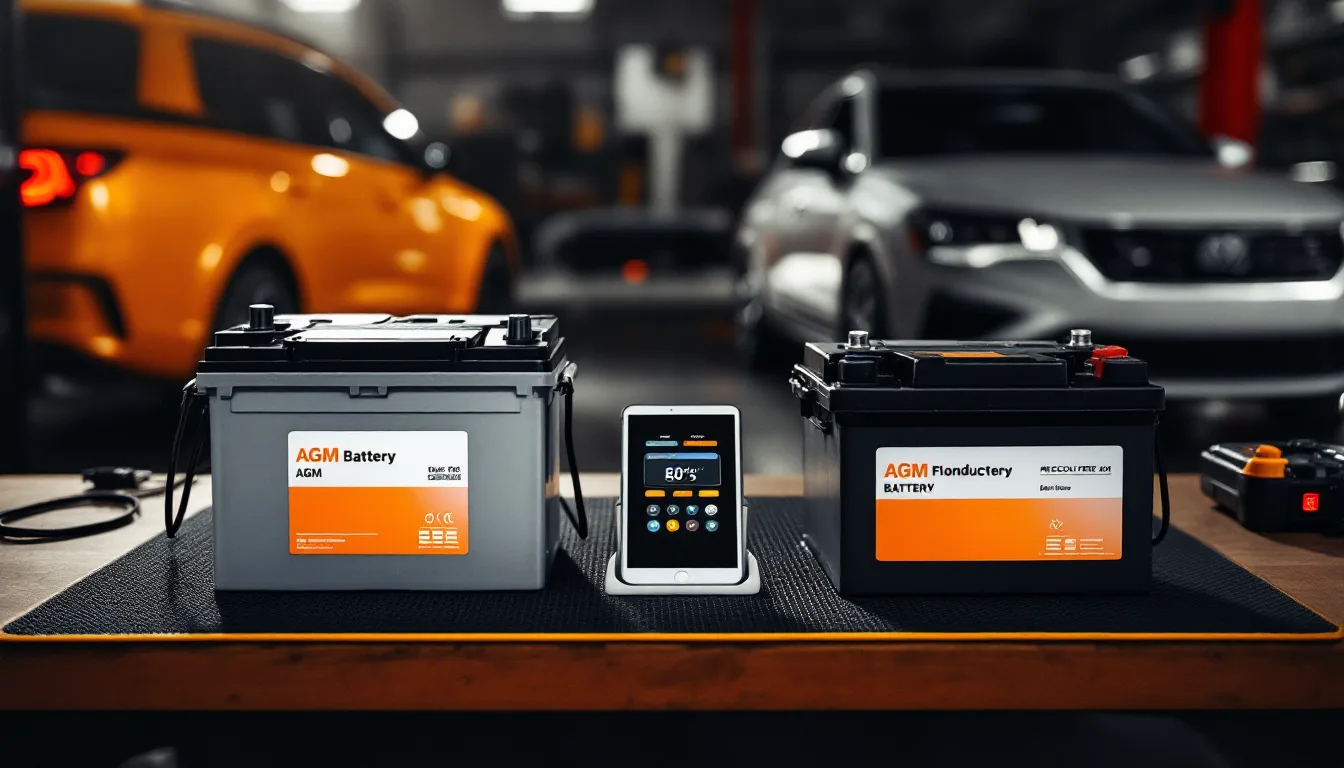
Why does a battery deserve more thought than a parts-store swap?
A car battery is the most common repair a mobile mechanic does in Dallas, and it is the one most often done wrong: the wrong chemistry on a vehicle that specifies AGM, no registration on a vehicle that manages its charging by battery age, no test of the alternator that killed the old one. Done properly, a battery replacement at your home or office in Dallas-Fort Worth runs $180–$620 with the trip included inside 30 miles of east Dallas, and it begins with a test of the old battery and the charging system, fits the battery the vehicle specifies, registers and codes it where the vehicle requires, and ends with a scan to clear the faults the old battery left. This guide explains why heat kills batteries here, what AGM is and when it is required, what registration does on BMW, Mercedes-Benz, Audi and Volkswagen, and what the job costs against the alternative. If the vehicle is cranking slowly this week, email service@mobilemechllc.com with the year, make and model and the reply gives the range.
Why do batteries fail faster in Dallas than almost anywhere?
Heat kills batteries; cold reveals the damage. A lead-acid battery stores energy in a chemical reaction between lead plates and sulfuric acid, and that reaction speeds up with temperature in both directions: it charges faster, it self-discharges faster, and it corrodes its own internal grids faster. A battery under a hood that sits at 140 degrees in an August parking lot at Firewheel or Town East loses water from its cells, sheds active material from its plates and grows corrosion on its grids months faster than the same battery in a northern climate.
The capacity goes quietly through the summer. The vehicle starts, because a warm engine needs little cranking current and warm plates deliver what little is asked. Then the first cool morning in November arrives, the oil is thicker, the starter asks for more amps, and the battery that tested fine on voltage cannot deliver them. That is why Dallas no-starts cluster in the first cold week rather than the hottest one, and why a battery test in October is worth having.
Three to four summers is a realistic life for a flooded battery in North Texas, four to five for an AGM that was registered properly, and considerably less for any battery that spent a season being drained flat and jump-started. The test on the invoice gives you the number so you are not replacing a battery with two years left or keeping one with two weeks.
What is the difference between flooded, EFB and AGM?
A flooded battery is the traditional design: lead plates in liquid acid, vented to the atmosphere. It is the cheapest and it is correct for most vehicles built before start-stop systems arrived. An enhanced flooded battery, EFB, has thicker plates and better cycling and is specified on some basic start-stop vehicles. An absorbed glass mat battery, AGM, holds its acid in fiberglass mats between the plates; Wikipedia's VRLA battery entry describes the family as "commonly known as a sealed lead-acid battery," and the sealed, spill-proof construction is why AGM can live in a trunk or under a seat. AGM tolerates deep cycling and vibration, delivers high current for a start-stop restart, and is specified by every German make and by most vehicles with start-stop, large infotainment systems or a remotely mounted battery.
The mistake that matters is fitting a flooded battery where AGM was specified. The vehicle charges an AGM to a different voltage profile; a flooded battery on that profile is overcharged, loses its water and is cooked within a year. The start-stop system reads the wrong state of health and disables itself, usually without a warning. And a flooded battery in a trunk vents acid fumes into a space that was designed for a sealed unit. The van carries AGM in the common sizes precisely so the substitution never has to happen in a driveway.
The reverse is fine. An AGM in a vehicle that specified flooded costs more and lasts longer, and on a vehicle with heavy accessory loads, a trailer brake controller, a winch, a light bar, an inverter, a sound system, it is often the better choice. The written range shows both options where both apply, and the battery replacement page lists the chemistry and location lines separately.
What does battery registration do, and which vehicles need it?
Vehicles with intelligent charging track the battery's age and condition and adjust the alternator's output as the battery wears, pushing a tired battery harder to keep it charged. When a new battery goes in, the vehicle has to be told, or it keeps charging the new battery as though it were the old one, overcharging it from day one. That telling is registration. Where the new battery differs in capacity or chemistry from the original, coding the new specification into the vehicle is the second step, so the charging strategy matches what is actually fitted.
BMW and Mini have required registration since the mid-2000s on their intelligent-charging platforms. Mercedes-Benz, Audi, Volkswagen and Porsche followed on theirs. A growing list of Ford, GM, Stellantis, Toyota, Honda, Nissan, Hyundai and Kia vehicles with start-stop now need a battery reset through the diagnostic tool after a replacement, which is the same idea under a different name. The symptom of skipping it is subtle: no light, no code, just a battery that fails in eighteen months instead of five years and a start-stop system that quietly stays off.
Registration needs a brand-level tool that can talk to the vehicle's charging module, and that is what a parts-store installer does not have and a dealer charges a day for. The van carries the tools for each make and performs the registration and coding at the vehicle, which is why the European line on the price table costs more than a domestic swap: the tool session is part of the job. On a leased vehicle the registration also writes the new battery into the vehicle's record the way the dealer's tool would, which matters at lease return.
What happens during a mobile battery replacement, step by step?
The old battery is tested first, in the vehicle, with a conductance tester that reports state of health and with a voltmeter under cranking load, so the decision to replace rests on numbers you can see. The alternator is tested next: output voltage, output under load and AC ripple, because failing diodes put ripple into the charging current that shortens a new battery's life, and because a new battery on a failing alternator is a repeat visit within the month.
On vehicles that lose adaptations, a memory saver is connected through the diagnostic port so windows, sunroof, steering-angle sensor and radio presets survive the swap. Then the battery comes out. Trunk batteries on BMW and Mercedes-Benz, under-seat batteries on many Audi, Volkswagen and Chrysler vehicles, and the batteries hidden under a cowl panel or behind a fender liner on a growing number of vehicles all take longer than a hood battery and are priced accordingly. The tray and hold-down are cleaned, corroded terminal ends are replaced from van stock, and the new battery is secured so it cannot shift.
The last step is the one that gets skipped elsewhere: registration and coding where the vehicle requires it, a start and a charging check, and a scan to clear the low-voltage faults the old battery left in the modules. Those faults matter on European vehicles, where a slow discharge stores dozens of codes and can leave a transmission in a limp mode that only the tool resets. The old battery goes in the van for recycling. The whole visit takes thirty minutes on a hood battery and about an hour on a trunk or under-seat battery with registration.
What does the job cost, and what moves the figure?
The table lists the typical Dallas-Fort Worth mobile ranges from the pricing page. Every figure includes the trip inside the radius, the tests, the terminal ends and the memory saver, and the battery and the labor are covered for 2 years parts and 2 years labor, up to 24,000 miles, nationwide.
| Battery line | Typical mobile range | Time at the vehicle | What moves the figure |
|---|---|---|---|
| Flooded battery, hood-mounted | $180–$320 | 30–45 minutes | Group size, cold cranking amps |
| EFB or AGM, start-stop or accessory-heavy vehicle | $280–$520 | 30–60 minutes | Group size, chemistry, hood or remote location |
| AGM with registration and coding: BMW, Mercedes, Audi, VW, Porsche | $320–$620 | 45–75 minutes | Trunk or under-seat access, tool session, capacity coding |
| Fit and register a battery you supply | $79–$129 | 30–45 minutes | Whether the battery is the correct chemistry and size |
| Alternator, if the charging test fails | $400–$900 | 1–2.5 hours | Output rating, access on the engine |
| Terminal end or cable repair | $60–$220 | 20–45 minutes | Terminal end versus full cable |
Three things set the figure inside each range: chemistry, where the battery lives in the vehicle, and whether registration and coding are needed. A hood-mounted flooded battery on a Camry is the floor; a trunk AGM on a BMW with registration is the ceiling.
The wider cost context is worth a sentence. AAA's Your Driving Costs 2024 puts the average annual cost of owning and operating a new vehicle at $12,297, per AAA, and a battery that lasts five years instead of eighteen months because it was registered is a small saving inside that figure made several times over. The technicians fitting them are part of a trade the Bureau of Labor Statistics counts at 805,600 jobs with a median wage of $23.88 an hour in 2024, per the BLS Occupational Outlook Handbook; the ones carrying registration tools to a driveway are a smaller group, which the European line reflects.
Why are European and start-stop vehicles the ones that go wrong after a cheap battery?
Because they are the vehicles where the battery is a managed component rather than a box of energy. A BMW 3 Series, a Mercedes-Benz C-Class, an Audi A4 or a Volkswagen Tiguan has a charging module that expects to be told about the battery, a trunk or under-seat location that needs a sealed unit, and a network of modules that store faults when voltage sags. A parts-store flooded battery dropped into that vehicle without registration produces the sequence a mobile mechanic sees every week: start-stop stops working, warning messages appear after a few months, the battery fails inside two years, and the owner concludes the vehicle is unreliable.
Hybrids are a special case in the same family. The 12-volt auxiliary battery, often a small AGM in the trunk, fails more often than owners expect and produces a dead dash that looks like a hybrid system failure. It is replaced on site with the correct AGM; the high-voltage pack is never opened at a residence. Vehicles with start-stop from the domestic and Asian makers increasingly need a battery sensor reset through the tool after a replacement, and the van performs it as part of the job.
The Plano city page and the Frisco city page describe why those cities generate the most registration calls: the share of vehicles under five years old with managed charging systems is highest there, and the alternative to a registered battery in the driveway is a day at a dealer on the Tollway.
How do you tell a weak battery from a drain that is emptying a good one?
A battery that is dead every few mornings is not always a bad battery. Something may be drawing current while the vehicle sleeps: a glove-box or trunk light that stays on, an aftermarket alarm or stereo amplifier wired to constant power, a dash camera on a hard-wire kit, a module that never goes to sleep because a door switch is faulty, or a trailer-wiring connector that corroded into a short. The battery tests healthy once charged, holds its voltage on the bench, and is flat again three days later.
The test is a parasitic draw measurement. After the vehicle has been locked and allowed to sleep, usually thirty to sixty minutes on a modern vehicle, the technician measures the current leaving the battery. A few tens of milliamps is normal for the modules that stay awake to listen for the key; a few hundred milliamps, or an amp or more, is a drain that will empty a healthy battery in days. The technician then pulls fuses one circuit at a time until the draw falls, which names the circuit, and traces it to the accessory or the module.
The repair is often trivial, a trunk light switch, a dash camera moved to a switched circuit, an alarm module disconnected, and it is the difference between a battery that lasts five years and a sequence of three batteries in two years, each blamed on the last one. On European vehicles a module that will not sleep after a software fault is diagnosed with the brand tool and sometimes needs a software update, which is quoted separately. The drain test is booked as a mobile diagnostic at $99–$169 when the symptom is a repeatedly flat battery that tests sound, and it is done at the vehicle in the driveway where it sleeps.
What happens to the old battery, and what should you do before the van arrives?
The old battery goes in the van and back to the supplier for recycling. Lead-acid batteries are the most recycled consumer product in the country; the Battery Council International reports a recycling rate in the high nineties, and the lead, the plastic case and the acid are all recovered. Any core charge appears on the invoice as a credit once the old unit is handed over, and you are welcome to keep the test printout showing why it was replaced.
Before the van arrives, leave the vehicle where it is and do not jump it unless you must. A jump that works hides the fault; a jump with the cables reversed for even a second can take out the main fuse, the alternator diodes and on some vehicles the body control module, turning a $300 battery into a $1,500 electrical repair. If you already jumped it and it runs, do not switch it off; drive to a safe spot and book the visit, and the technician tests the charging system while it runs. Have the key available, and on vehicles that store a radio code, have the code to hand in case the memory saver cannot be connected.
A battery under an open recall, which happens occasionally on vehicles with a battery sensor or a cable fault, is repaired at no charge by the dealer; the VIN check at NHTSA's recall lookup takes a minute. And an independent battery replacement does not affect a factory warranty; the FTC's guidance on auto warranties is clear that coverage cannot be conditioned on dealer service, and the invoice names the battery, its chemistry and the registration performed, which is the record a warranty administrator asks for. If the vehicle will not start at all, the no-start page covers the tests that separate a battery from a starter or a cable.
Where do these figures come from?
- VRLA battery: the quoted description and the AGM background.
- Battery Council International: lead battery recycling.
- AAA, Your Driving Costs 2024: the ownership figure a five-year battery saves against several times over.
- Bureau of Labor Statistics, Automotive Service Technicians and Mechanics: the trade that fits batteries, of which the registration-equipped technicians are a smaller share.
- NHTSA recall lookup: battery sensors and cables occasionally fall under recall; the VIN check takes a minute.
- FTC, Auto Warranties and Routine Maintenance: an independently fitted, registered battery leaves factory coverage in place.
- Battery ranges: typical mobile ranges across Dallas-Fort Worth from the service pages of this site; the written range for a specific vehicle is confirmed from its year, make and engine before the visit.